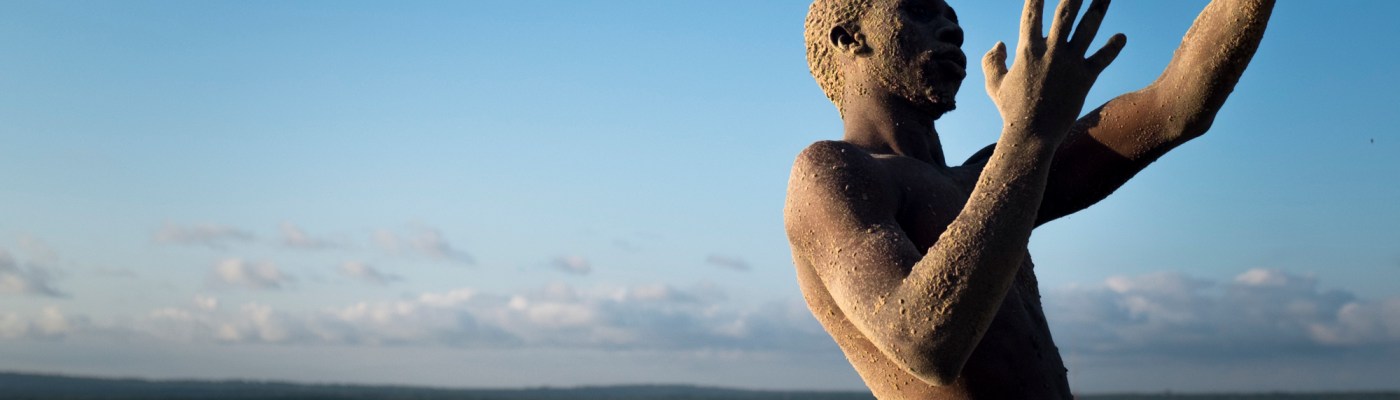
Ian McNaught Davis is a South African photojournalist living at Goodenough for the year while he works towards an MA in Photography from Goldsmiths, University of London. He has lived and worked throughout Africa, as well as in Australia, Kazakhstan, and Georgia. We at We Are GoodEnough are big fans of his work, and so we’d like to highlight this recognisable face at the College in anticipation of our special commemorative biennium edition of the magazine, and to get our talented other members’ creative juices flowing (remember, submission deadline is February 23rd!). What follows is an ‘artist spotlight’ of sorts: an interview with co-editor Claire Hurley, and a series of photographs Ian has selected, along with short descriptions of their story.
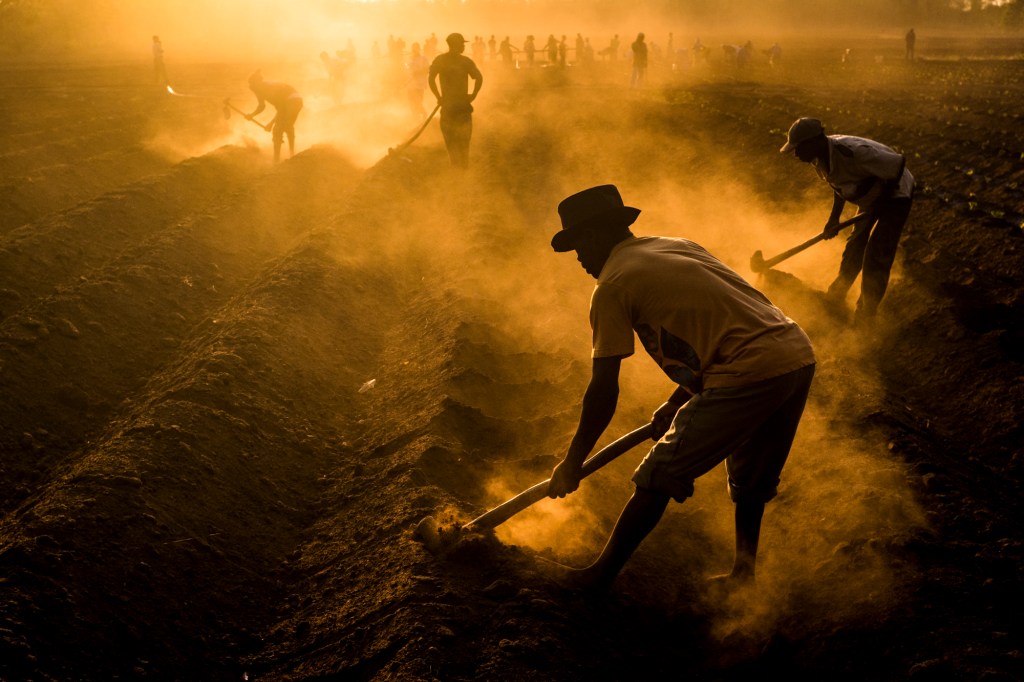
Men dig the soil near Zomba in Malawi as part of the planting process for tobacco. Growing tobacco is a thirsty business – each plant requires 20 litres of water just to secure it in the dry soil as it is planted.
The digging starts before sunrise to get as much work possible before the midday heat sets in.
This photograph is part of my series “I Need You More Than You Need Me” on peoples’ relationships with water, and has been exhibited in the Somerset House Gallery and in Casa Saraceni in Bolgna, Italy.
CH: Your work in photojournalism has been variously politically, commercially and culturally orientated. At this stage, do you find yourself drawn to one of these areas in particular in what you document?
IMD: I think the cultural, looking at the similarities across cultures. I’m interested in how we are all basically the same, and the kind of photography I like is quite reactive. So there’ll be something that I’m drawn to in a given situation, whether it’s a person being a bit isolated, or marginalised, or showing something that I can relate to. And I think that happened the more that I travelled by myself. The more I travelled alone, the more in touch it forced me to be with the situations around me. I have this project called HER, and the themes that come up [in it] are about women being sidelined, but also women showing strength […] and you see this thread throughout the countries that I’ve travelled to.
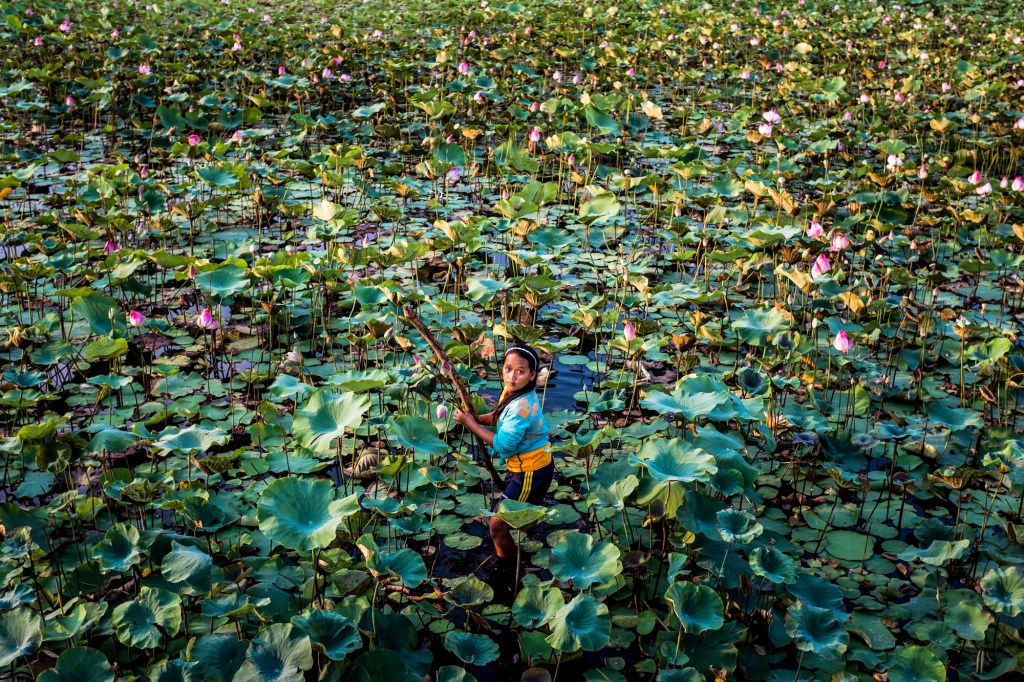
I photographed this girl collecting lotus flowers on the outskirts of Kampot, Cambodia. The Cambodian countryside is punctuated with ponds like these – caused by 2.7-million-ton bombing campaign by the US during the Vietnam War.
Today, these are known as “American Ponds”, and serve as both a source of life and a poignant reminder of death.
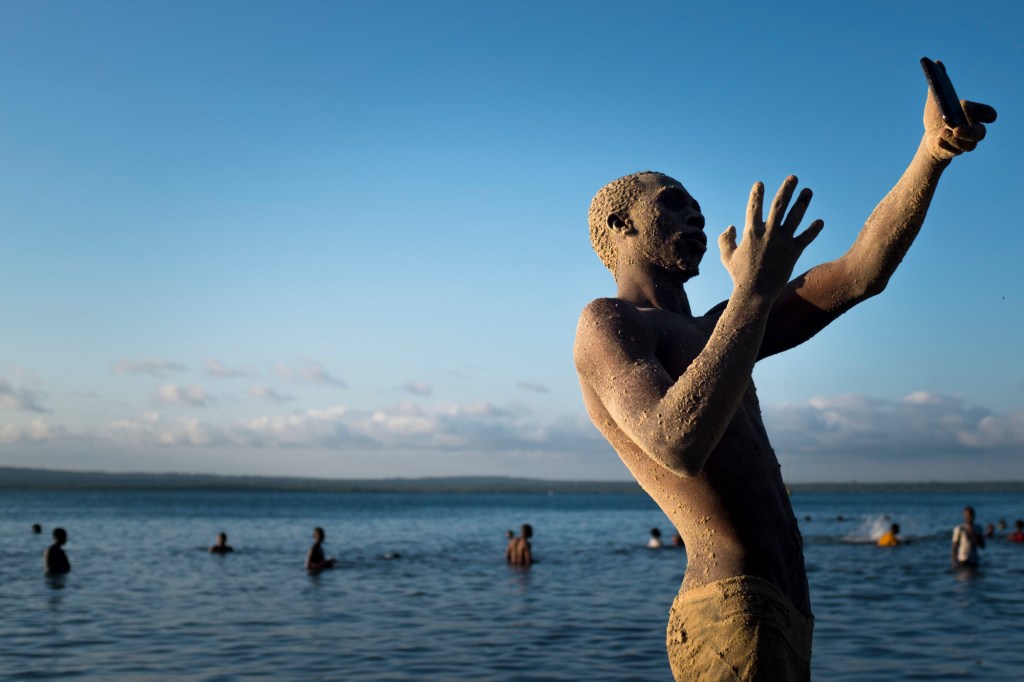
A young man takes a selfie at the Raskazone Swimming Club in Tanga, Tanzania.
In the late afternoon, the number one priority for boys and young men at the Raskazone Swimming Club is showing off. Backflips, breakdancing and wrestling never fail to draw crowds and this guy got my attention – covered in beach sand and photographing himself. The evening light near the equator is brilliant but disappears quickly. I was luckily enough to get the last rays of sideways light that illuminate him like spotlights on a statue.
This photograph has been exhibited at the Somerset House Gallery in London as part of the Syngenta Photography Award.
CH: Related to that, how has your time spent living in various countries and documenting disparate cultures impacted how you approach your photography?
IMD: I think when you’re anywhere else, for instance if you’re in a place where there’s a different alphabet, then crossing the road and going to the bank and daily chores become an adventure. I kept on feeling like I was five years old, [thinking] “wow, look at all this stuff!” Everything looks new and fresh and sharp. That’s really powerful when you’re taking pictures, to have that curiosity.
There seems to be this block for people photographing at home, because you’re used to it. Of course, South Africa is fascinating and there’s plenty of material there. But there is something to be said about being somewhere else. I lived in Kazakhstan for a while […] and something as simple as [the fact that] there’s not much colour there, it forced me to look at light. In a place like Ethiopia, where there are plenty of colours, and in Tanzania and Vietnam, that forced me to look at shapes and figures and corresponding colours. There’s always something beguiling about another place…
CH: That makes sense, because when you are somewhere else, your eyes are attuned differently. It brings things into relief that you wouldn’t see back home.
IMD: Exactly.
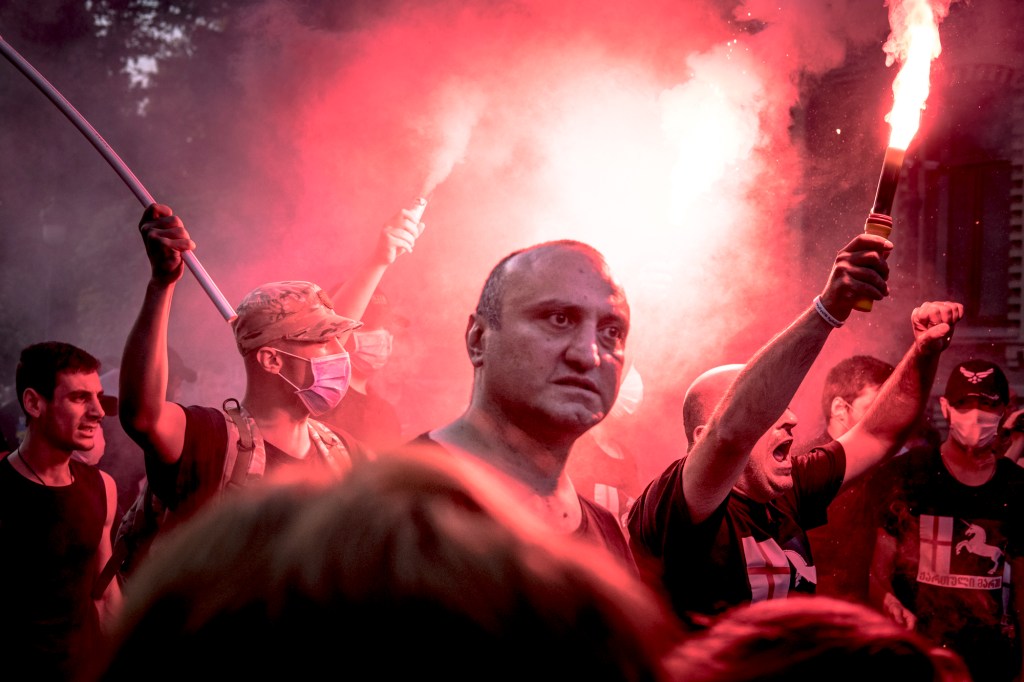
Nationalists protest at an anti-immigration rally through the streets of Tbilisi, Georgia. These men pictured are members of the political party Georgian March, and are protesting against the prominence of foreign nationals in downtown Tbilisi. The Georgian March announced plans to form vigilante groups to patrol Tbilisi in search of “suspicious foreigners”.
I mainly shoot on a very small viewfinder camera that allows me to get really close to my subjects without creating too much attention – quite important when photographing events like this.
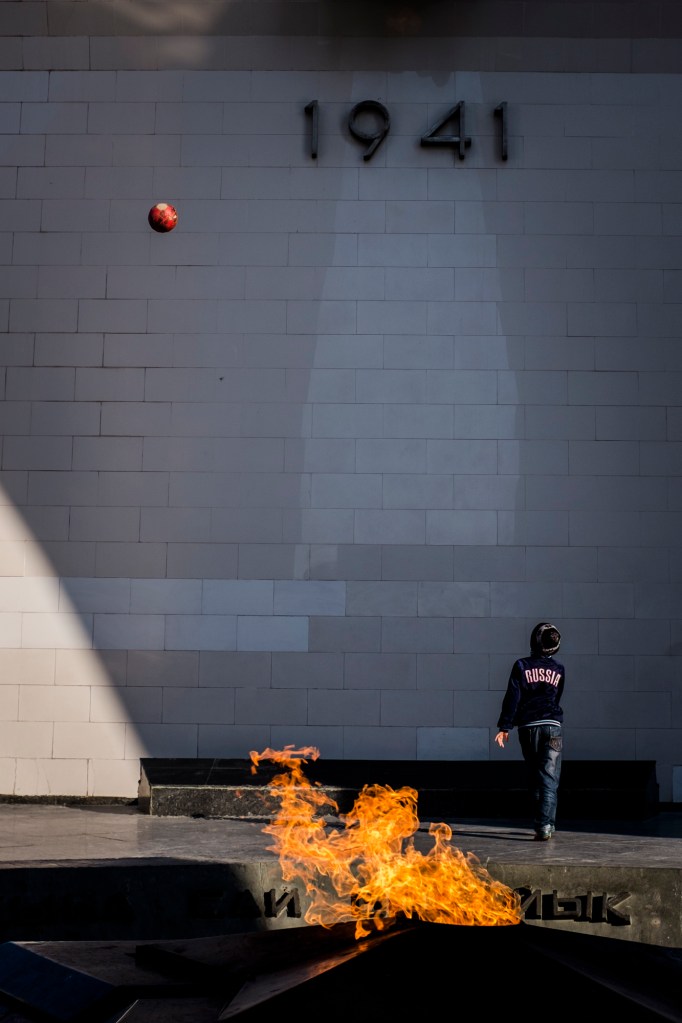
A boy kicks a soccer ball next to the World War II Eternal Flame Memorial in the town of Aktau in Kazakhstan. The Eternal Flame is powered by gas and works occasionally.
Living in Aktau, a remote town in the desert on the edge of the Caspian Sea, was a bizarre experience for me with many obstacles for taking photographs and a deceptively potent sense of culture shock. Without the context of a caption, this image is especially strange and is a fitting one to show my perspective on my time there.
CH: Can you speak a bit about how you came about a career path in the creative sector? And about the experience of transitioning into freelance employment, especially in the creative sector?
IMD: I’ve always wanted to do photography, since I was, like, eleven. But there’s no clear career path for photography, which is why this is a good question! I ended up studying psychology and then journalism, thinking that I could get into photojournalism somehow. I started volunteering for NGOs, taking pictures for them. In 2009 I ended up going on a mission to Madagascar. That was quite a big moment, because at the time I was working for GQ South Africa, writing about pocket squares and moisturiser and boat shoes… and then I was with this organisation called Operation Smile, and I got to follow these kids going through the different phases of an operation [to heal cleft lips and palates]. I was photographing them with their mothers, and it was a lot more fulfilling than the kind of work I was doing back home. So, working with NGOs, I was able to build up a portfolio. But I realised that to do this properly I would have to quit my job. And then it became about fortuitous circumstances.
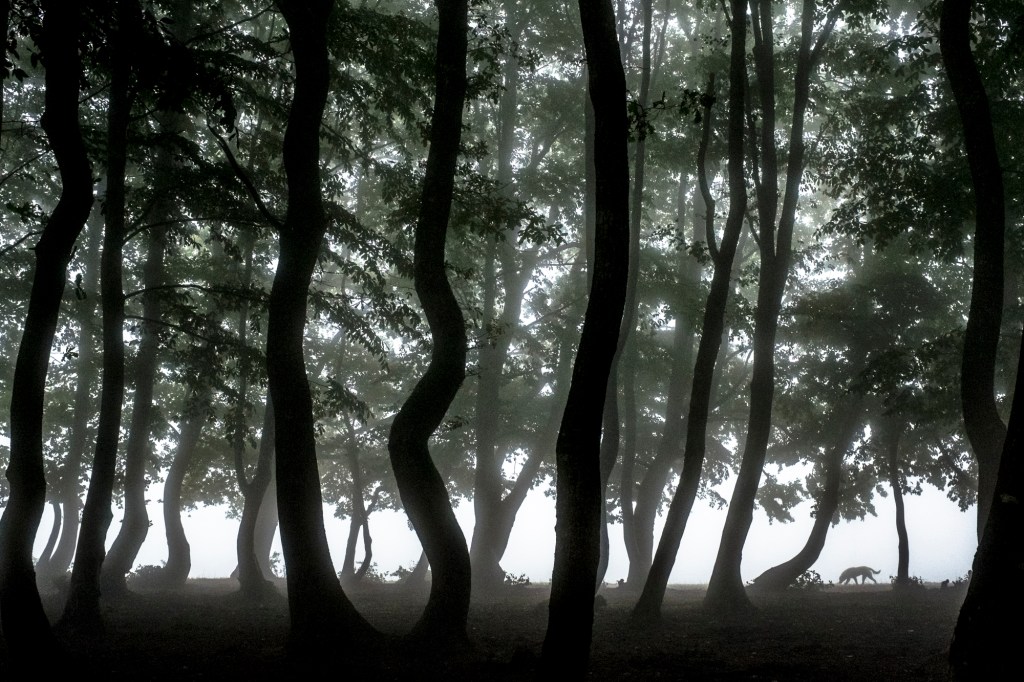
This forest is the same one where a monk lives in a hut on the top of a 40-metre high pillar. I’m a sucker for the mist and fog, and how they can transform a scene. I also really like trees as silhouettes so I was in my element here. A dog appeared for a moment, and I managed to photograph it between the trees. People ask me if it’s a wolf. I’d like to be a wolf, so I say it might be a wolf.
CH: How so?
IMD: Well, I had always wanted to go cycling through Africa. I was planning this for a long time, but I didn’t have a bicycle, and it had to be a specific kind of touring bicycle, and these were hard to come by. And one day, I was on an extended lunch break, reading on a bench outside, and suddenly this guy pulls up. He had cycled from Turkey all the way through Africa, and when he made it to Cape Town, he unfortunately was mugged just outside the city. He had had enough. So, just making small talk, I asked him if he wanted to sell me his bike. It was the perfect situation. It was insane. I bought the bike, went upstairs, and typed my resignation letter.
So I quit and started cycling around, and I would be invited into people’s homes, and it was a really interesting way to meet people. And people were surprisingly open to a scruffy guy on a bicycle. I started having all these stories, and combined with all the tangents I would take on the bicycle, I realised that this was a way for me to start writing as many stories as I could.
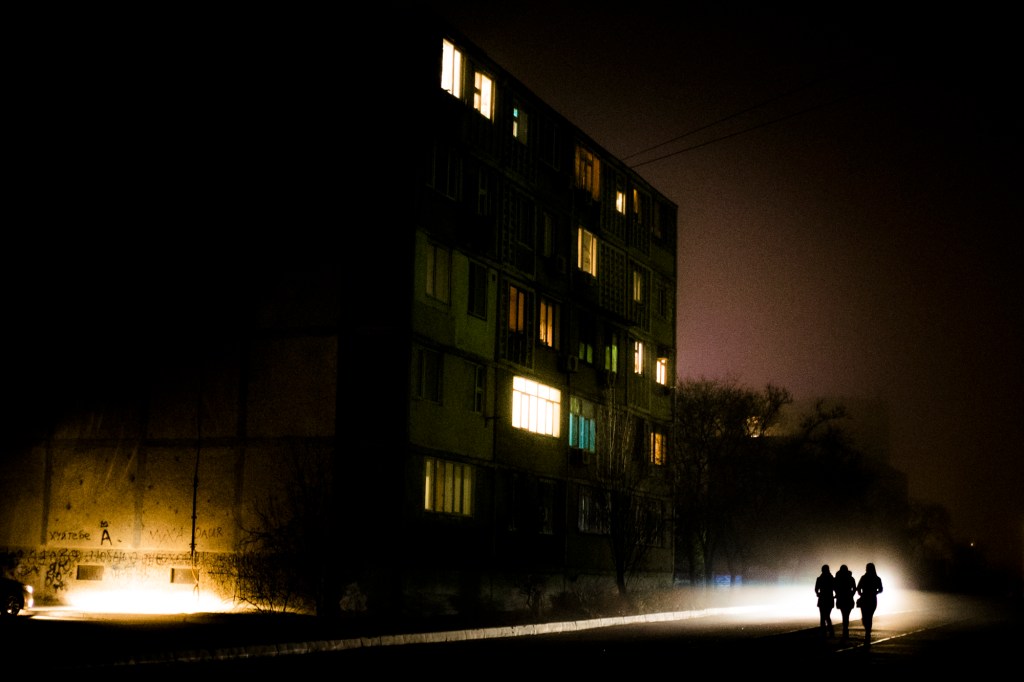
Women walk past krushchyovka (Soviet-era concrete paneled apartment blocks) in Aktau, Kazakhstan. I lived in an apartment like the ones in the background, and I feel strangely nostalgic about this picture.
It turned out to be easier to photograph at night as police were suspicious of cameras, and most people were inside at night – sensibly, as it was freezing.
CH: So you were actively taking photos and writing stories during your travels?
IMD: Yes, and I realised it had to be one thing or the other: either I was doing this for my portfolio or not. I had to go back home by the time I was in Botswana, because my brother was getting married, and on public transport I got even more stories, because I was a lot more open to interacting with strangers. I’m quite introverted, and this trip kind of forced me to knock on people’s doors when it was raining, stuff like that. And I noticed that people would tell me quite heavy, personal things. I think everybody’s carrying things, and they want to tell someone. It became almost confessional.
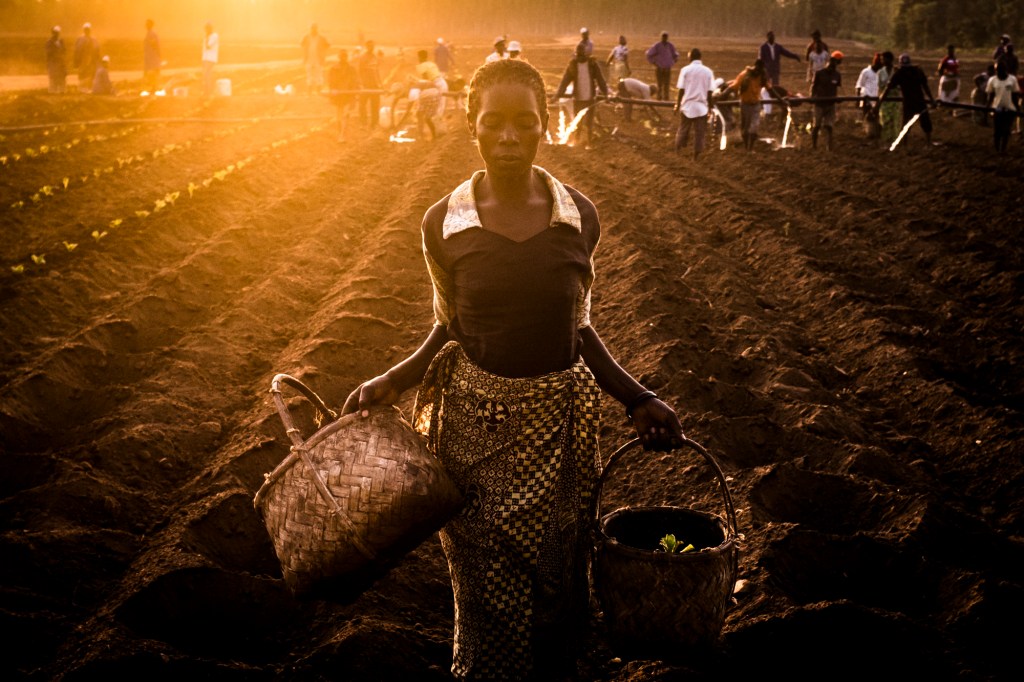
A woman plants tobacco on a tobacco estate near Zomba in Malawi. I was drawn to photographing this moment of both strength and grace, and the dawn light hanging in the dust made the scene feel even more compelling.
This is part of my project ‘HER’, that explores societies’ representation of women.
CH: Evidently your journey to get here has been fascinating and unconventional. How does this year in London figure in your timeline— what direction do you see yourself and your work going in the near (or distant) future?
IMD: For the last six years I’ve been lucky in that I’ve been able to photograph the things that I want to photograph, and a lot if it comes down to being stingy. There isn’t a lot of money in documentary photography, so I’ve kept it afloat with freelance work, but it has been difficult. For the last two years I’ve been in Georgia, and photographically it was just the best place to shoot things. It’s this mix of old Soviet and an almost medieval way of life, and there’s this mysterious clash of cultures in a country that’s still trying to figure itself out. I was so spoiled for choice to photograph things there, that it was tempting to just keep shooting for years. But I felt that I needed to learn the business side of photography. I also realised that journalism is in a bit of a precarious spot. I went to Ukraine to cover the conflict in Eastern Ukraine, with the UNDP (United Nations Development Programme), and I did a story about women living on the frontline. It was the closest I’ve come to dying. I hadn’t photographed conflict before. It took two years to get that piece published, because according to the editors that I’d pitched it to, the Ukraine just wasn’t a ‘sexy war.’ At that point I realised that the photojournalism that I wanted to do when I was little, that world has changed. I needed to find ways to fund my work. So that’s the thing that’s brought me to London, the idea of learning things like cinematography in this course, learning more about fine art photography, and also interacting with other people. Because [the work] can get quite lonely. It’s actually been quite an adjustment, but in a good way.
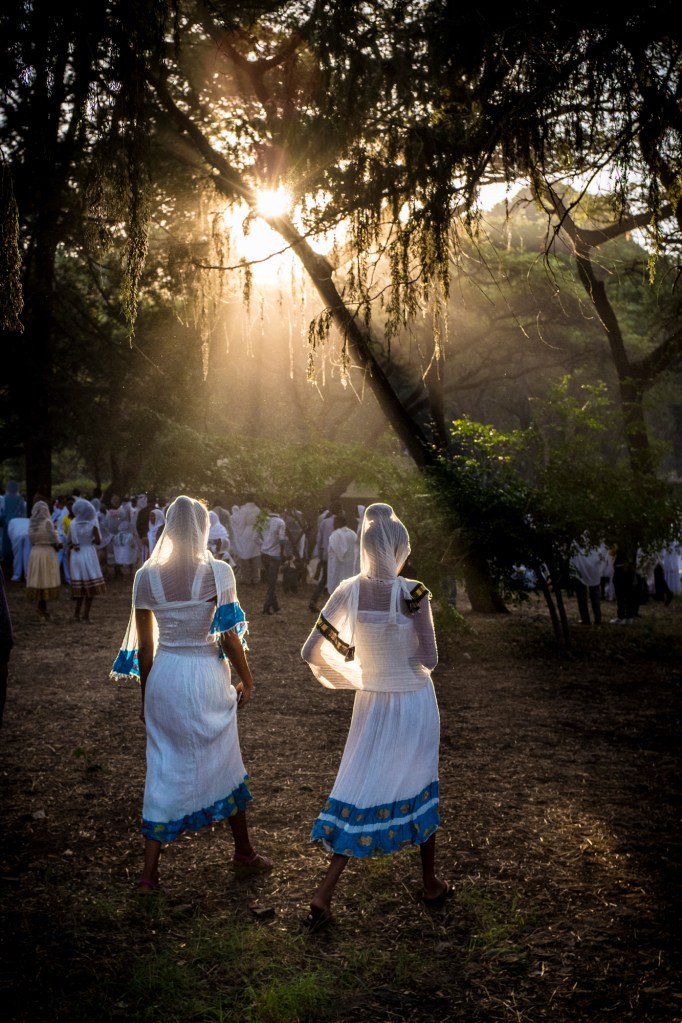
Two Ethiopian girls dressed in shamma (traditional white robes) walk around Fasilides’ Bath on the morning of Timkat – a holy festival.
Timkat is the Ethiopian Orthodox church’s celebration of Epiphany, commemorating the baptism of Jesus in the Jordan River. The festival is famously celebrated in the town of Gondar, where pilgrims come from around the country to be baptised in the Fasilides’ Bath that dates back to the 1600s.
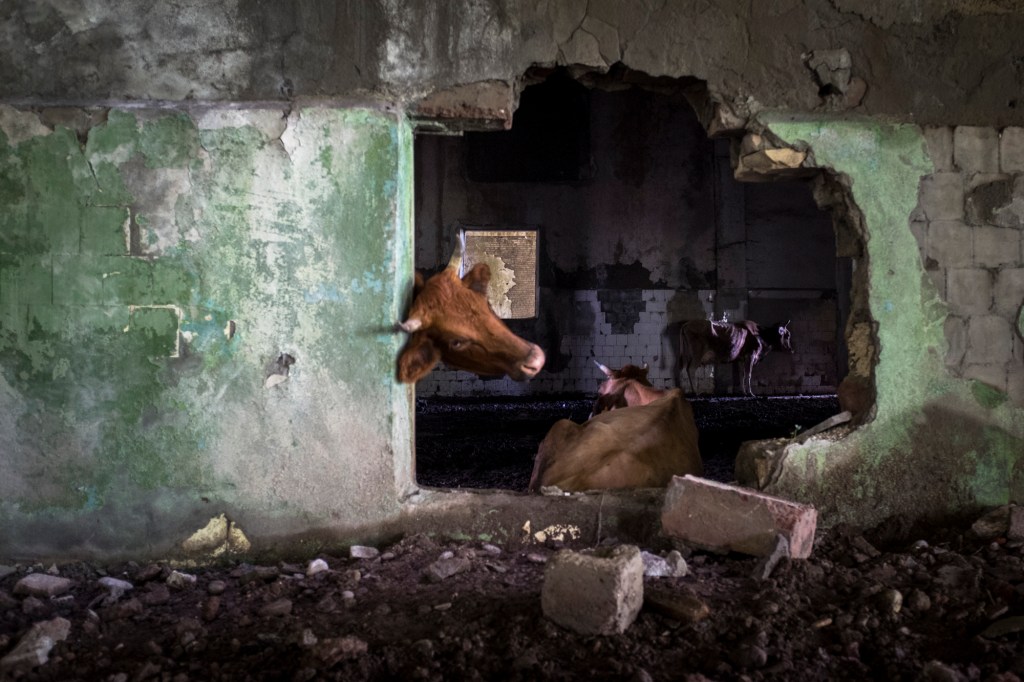
I was on assignment in Western Georgia, documenting attempts to resurrect the Georgian tea industry – an industry that provided tea to most of the USSR in the Soviet era. I stumbled upon these cows that had appropriated an abandoned tea factory.
I prefer to photograph people but I make exceptions for cows, chickens and dogs.
Ian has upcoming exhibits in London: on February 21st as part of AFRICA: Between Earth and Sky, hosted by Goodenough’s African and Caribbean Society (WG LCR, 7.00pm) and on March 30th, at the Royal College of Music, in collaboration with fellow College member, composer Owen Ho.
Find more of his work at http://ianmcnaughtdavis.weebly.com/
 We Are Goodenough Magazine
As a reporter, I work with a lot of photojournalists. I’m amazed by Ian’s pictures which are really beautiful and powerful. I like them.
LikeLiked by 2 people